The Essential Spice Atlas of Southeast Asian Street Food
Southeast Asian street food is globally renowned for its multi-layered flavor profiles: sweet, sour, salty, bitter, and umami all firing on the palate simultaneously. The secret behind this intense harmonization lies in fresh aromatic herbs and ground spices, pounded daily in heavy granite mortars by hawker masters.
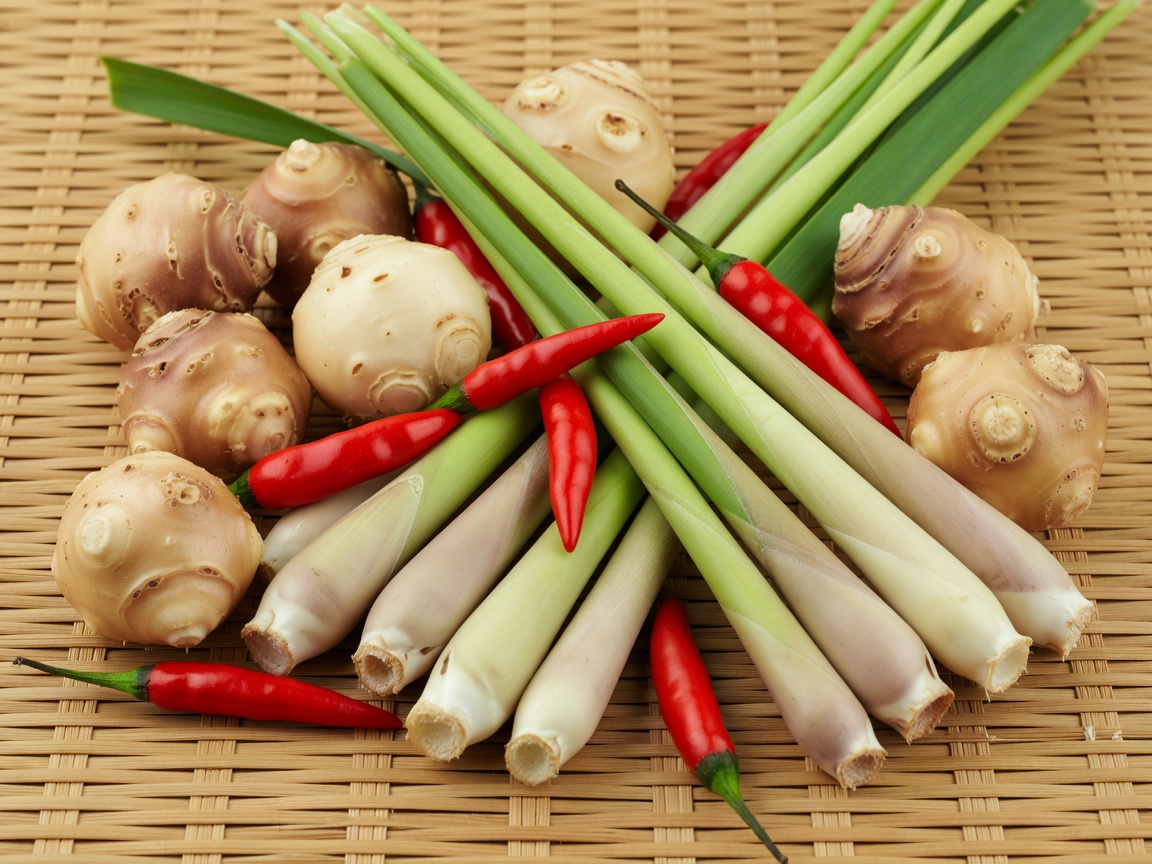
1. Galangal (Kha) vs. Ginger
While often confused with common ginger, galangal (known as Kha in Thai) possesses a sharper, woodier, pine-like aroma with a peppery citrus finish. It forms the non-negotiable base of Thai Tom Yum soup and Indonesian Rendang paste, providing an essential piney back-note that cuts through rich coconut milk.
2. Bird's Eye Chili (Prik Kee Noo)
Measuring between 50,000 to 100,000 Scoville Heat Units, the tiny Thai bird's eye chili delivers immediate, sharp heat that lingers briefly without overpowering delicate seafood notes. Hawker stalls crush these fresh into lime juice and fish sauce to create Prik Nam Pla, the omnipresent condiment on every Thai table.
3. Kaffir Lime Leaves (Makrut)
The double-lobed leaves of the makrut lime contain high concentrations of citronellal oils. Torn fresh by hand just before serving, they release a perfume that defines green curries, Tom Kha Gai, and Malaysian laksa pastes.